

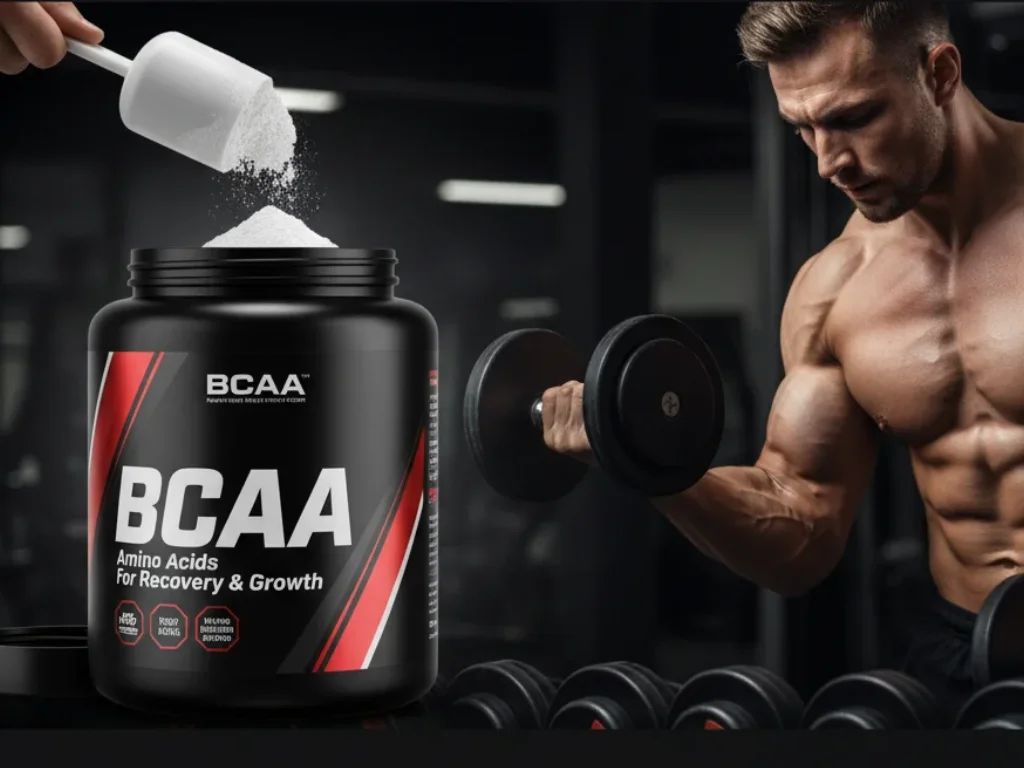
You’re pushing hard in the gym, breaking down muscle fibers to build them back stronger. But what exactly helps in this crucial repair and growth process? Enter BCAAs – Branched-Chain Amino Acids – a vital group of amino acids that play a direct role in how your muscles recover and grow.
What Are BCAAs? The Essential Trio BCAAs consist of three essential amino acids:
- Leucine: The superstar! Leucine is primarily responsible for triggering muscle protein synthesis, the process by which your body builds new muscle.
- Isoleucine: Plays a role in energy production, especially during exercise, and can help with glucose uptake into cells.
- Valine: Contributes to muscle growth, tissue repair, and energy.
These three are “essential” because your body cannot produce them; you must get them through your diet or supplements. Unlike other amino acids, BCAAs are primarily metabolized in the muscle itself, not the liver, giving them a direct impact on muscle function.
How Do BCAAs Help Your Muscles?
- Stimulate Muscle Protein Synthesis (MPS): Leucine is the most potent activator of the mTOR pathway, which is the primary signaling pathway for muscle growth. By providing this signal, BCAAs help kickstart the muscle-building process.
- Reduce Muscle Soreness (DOMS): BCAAs can help decrease exercise-induced muscle damage, which translates to less delayed onset muscle soreness (DOMS). This means you can recover faster and get back to training sooner.
- Prevent Muscle Breakdown (Anti-Catabolic): During intense workouts or periods of calorie restriction, your body might start breaking down muscle tissue for energy. BCAAs, particularly leucine, can act as a fuel source and signal to the body to preserve existing muscle, reducing catabolism.
- Improve Exercise Performance & Reduce Fatigue: BCAAs can be used by the body for energy during prolonged exercise. They also compete with tryptophan (an amino acid that converts to serotonin in the brain, leading to fatigue) for uptake into the brain, potentially delaying central nervous system fatigue.
When to Take BCAAs for Maximum Benefit?
- During Workout (Intra-workout): This is a popular time to take BCAAs, especially for longer or more intense sessions. It can help prevent muscle breakdown and provide an immediate energy source.
- Before Workout (Pre-workout): Taking BCAAs before training can help prime your muscles for the work ahead and potentially reduce muscle damage.
- After Workout (Post-workout): While a complete protein source (like whey) is generally recommended post-workout, BCAAs can still contribute to stimulating muscle protein synthesis.
- Between Meals: If you have long gaps between meals and want to prevent muscle breakdown, BCAAs can be a good option.
BCAAs vs. Complete Protein: It’s important to remember that BCAAs are part of a complete protein. While BCAAs are excellent for specific functions like triggering MPS and reducing breakdown, a full-spectrum protein (like whey, casein, or whole foods) provides all the essential amino acids needed for comprehensive muscle repair and growth. BCAAs are best used as a supplement to an already protein-rich diet, not a replacement.The Bottom Line: BCAAs are a powerful tool in your fitness arsenal, especially for active individuals. By supporting muscle protein synthesis, reducing soreness, and preventing muscle breakdown, they can significantly aid in your recovery and growth journey. Consider incorporating them into your routine to help get the most out of every workout.





 Static strength e-book for men and women
  Whey Gold Standard Double Rich Chocolate